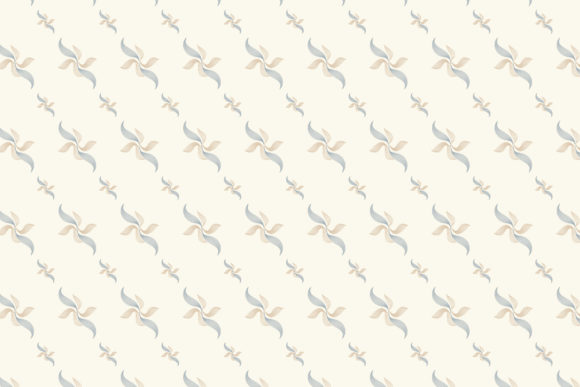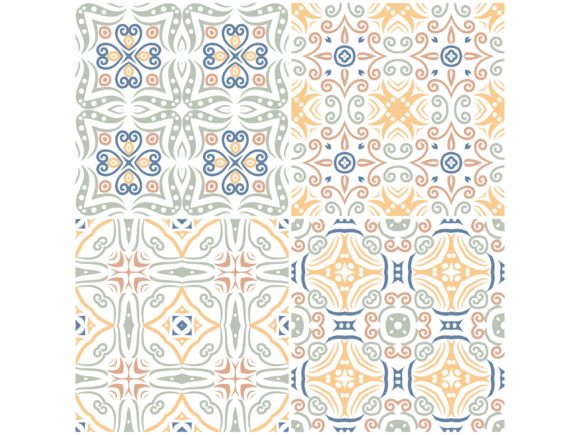
Vintage Tile Retro Seamless
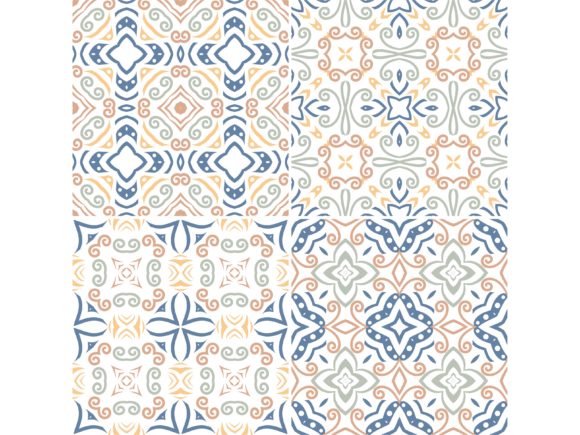
If you’ve ever spent hours trying to tile a background without visible seams—or worse, ended up with mismatched edges that ruin the retro vibe—you’ll appreciate how effortlessly Vintage Tile Retro Seamless solves that problem. This isn’t just another pattern pack. It’s a thoughtfully curated collection built for real work: branding refreshes, social media templates, presentation decks, packaging mockups, classroom posters, and even custom merchandise. Designed with authenticity in mind, each tile captures the warmth of mid-century ceramics, 70s linoleum, and 80s kitchen backsplashes—without the dated clutter or pixelated artifacts.
What Makes These Tiles Actually Seamless—and Why That Matters
“Seamless” sounds simple until you try scaling it across a 4K banner or wrapping it around a product mockup. Many retro patterns claim seamlessness but break down at larger sizes or when rotated. Vintage Tile Retro Seamless was constructed using vector-based tiling logic—not just cropped raster repeats. That means the Ai and EPS files retain crisp edges at any scale, while the PNG and JPG versions are pre-optimized with transparent or white backgrounds (depending on use case), so they drop into design tools without manual trimming.
The collection avoids over-saturation and visual noise. Instead of cramming in every retro motif imaginable, it focuses on cohesive palettes—think ochre + sage + cream, or burnt orange + charcoal + off-white—each grounded in historically accurate color shifts from analog printing and aging materials. You’ll notice subtle texture variation: slight grain in the EPS, gentle dithering in the PNG, and soft edge diffusion in the JPG version. These aren’t flaws—they’re intentional cues that signal tactility and time, helping digital designs feel more human and less generic.
Where These Tiles Show Up in Real Projects
Freelancers building brand identities for cafes, record stores, or indie bookshops often reach for Vintage Tile Retro Seamless when clients ask for “something nostalgic but not kitschy.” A Portland-based branding studio recently used one of the tile variants as a subtle background layer behind hand-drawn typography on a craft beer label—visible only under certain lighting, adding depth without competing with the main message.
Educators use the PNG files in Canva or Google Slides to create themed lesson headers—math worksheets with geometric tile borders, history timelines with muted 60s-inspired backdrops, or ESL flashcards where consistent visual rhythm supports memory retention. Because the files include transparency, they layer cleanly over photos or gradients, which saves time versus building custom masks from scratch.
For marketers running seasonal campaigns, these tiles speed up asset production. One e-commerce team reused a single tile variant across email banners, Instagram story frames, and printable promo cards—keeping visual continuity across channels without needing multiple designers or revisions. The consistency didn’t feel repetitive; instead, it reinforced brand recognition through repetition done well.
File Types—And When to Reach for Which One
- Ai File: Best for Adobe Illustrator users who need full editability—adjusting colors, isolating elements, or combining tiles with custom vectors. Ideal for logo lockups or packaging where precise CMYK control matters.
- EPS File: Works reliably in older design software and supports both RGB and CMYK workflows. Still widely accepted by commercial printers—use this when prepping files for physical products like mugs, notebooks, or fabric prints.
- PNG File: Transparent background, lossless compression. Perfect for web overlays, Figma prototypes, or PowerPoint slides where you need clean layering over images or videos.
- JPG File: Optimized for fast loading and broad compatibility. Use this for blog headers, social media posts, or email templates where file size and universal support outweigh the need for transparency.
Practical Tips Before You Drop Them Into Your Workflow
Start small. Try applying one tile to a single slide, business card, or thumbnail before committing to a full brand rollout. Retro aesthetics can easily tip into “costume-y” if overused—balance is key. Pair a bold tile with generous whitespace and restrained typography (think Grotesk or clean serif fonts) to let the pattern breathe.
Watch contrast. Some tiles have low-value ranges that may fade against dark UI backgrounds or get lost in printed materials. Test your chosen tile at 100% scale on the final output medium—don’t rely solely on screen previews. If you’re designing for accessibility, check contrast ratios using tools like WebAIM’s Contrast Checker, especially if overlaying text directly on the tile.
Don’t overlook licensing. While Vintage Tile Retro Seamless includes commercial-use rights, always verify whether your intended application falls within standard terms—e.g., reselling the tile as part of a template marketplace item may require an extended license. Most creators find the included license covers common uses: client work, internal presentations, merch, and published digital content.
Why Designers Keep Coming Back to This Collection
It’s not just about nostalgia—it’s about reliability. In a landscape where many retro assets look either overly polished (losing their charm) or poorly scanned (losing clarity), this collection strikes a balance. The textures feel earned, not applied. The colors behave predictably across devices. And because all four file types share the same underlying structure, switching between them doesn’t mean reworking alignment or scaling decisions.
One freelance UX designer told us she uses the EPS version to build reusable Figma components—then exports PNGs for dev handoff. Another educator prints the JPG tiles onto sticker paper for tactile classroom activities, cutting them into shapes for sorting games. A small-batch candle maker applies the Ai file directly to laser-cut wood labels, adjusting hue to match soy wax tones.
That versatility isn’t accidental. It’s the result of testing across real environments—not just design apps, but print shops, classroom projectors, mobile screens, and retail displays. When you choose Vintage Tile Retro Seamless, you’re choosing a tool that adapts instead of demanding adaptation.