Circle Ornaments: A Practical Mandala Collection for Designers and Communicators
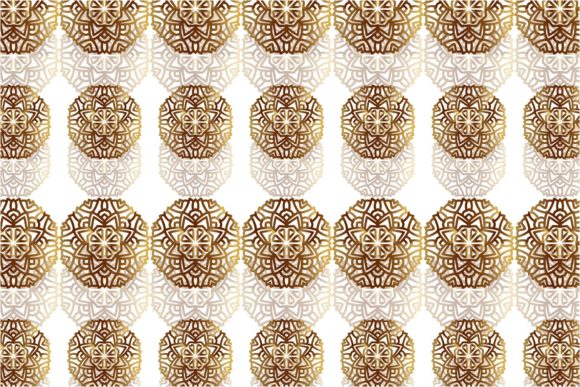
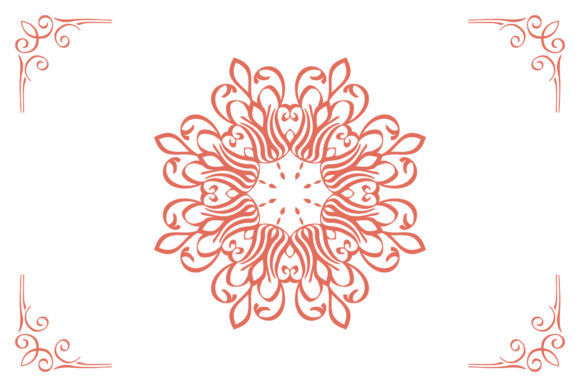
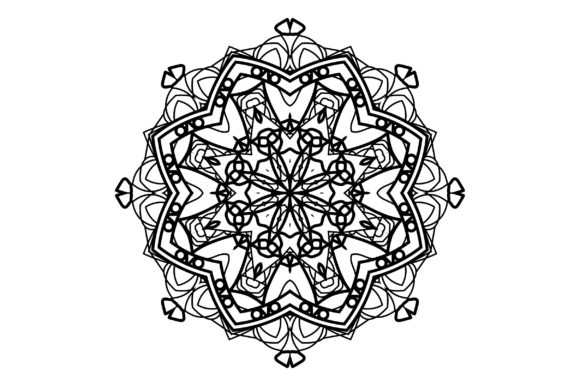
Circle Ornaments is a curated digital asset collection centered on circular decorative elements—symmetrical, scalable, and rooted in mandala-inspired geometry. It delivers three core file formats: AI (Adobe Illustrator), EPS (Encapsulated PostScript), and JPG (high-resolution raster). Unlike generic clipart or overused stock graphics, this set prioritizes clean vector construction, intentional negative space, and balanced visual weight—making it suitable for both print and digital applications where clarity and adaptability matter.
What Sets This Collection Apart from Other Ornamental Assets
The strength of Circle Ornaments lies not in novelty alone, but in execution consistency. Each design is built as a single-layer vector with minimal anchor points, ensuring smooth scaling without distortion—even at billboard size or embroidery-ready dimensions. The AI and EPS files retain full editability: colors can be adjusted, strokes modified, and individual components ungrouped without breaking symmetry. The JPGs are provided at 300 DPI and include transparent backgrounds, useful for quick mockups or social media overlays where vector support isn’t available.
Unlike many mandala-themed packs that lean heavily into spiritual or New Age aesthetics, Circle Ornaments avoids overt symbolism. Its motifs are geometrically precise—concentric rings, interlocking arcs, radial line patterns, and subtle dot-and-line hybrids—designed to complement rather than dominate. That neutrality makes them adaptable across contexts: a tech startup’s presentation deck, an educator’s worksheet header, a publisher’s chapter divider, or a small business’s packaging accent.
Real-World Usability Across Professional Workflows
In practice, designers report using Circle Ornaments most often for three purposes: structural framing, visual rhythm reinforcement, and brand-aligned embellishment. For example, a freelance marketer building a client’s annual report might use a simplified circle ornament as a section break between financial summaries—its symmetry subtly signals transition without distracting from data. An educator creating printable flashcards may place a muted version in the corner of each card to reinforce visual cohesion across dozens of pages.
Print professionals appreciate the absence of embedded effects (e.g., rasterized shadows or gradients) in the vector files. This eliminates compatibility hiccups when opening in older versions of Illustrator or importing into InDesign layouts. Likewise, the consistent 1–2 pt stroke weights and evenly spaced elements mean ornaments scale predictably: reducing a 5-inch-wide motif to 0.25 inches still yields legible detail, unlike some ornamental sets that collapse into visual noise at small sizes.
Strengths in Flexibility and Long-Term Utility
Flexibility here isn’t just about format variety—it’s about how easily each element integrates into existing systems. Because all vectors follow standard color models (CMYK and RGB swatches included), switching between print and web output requires no rework. Designers using Figma or Affinity Designer can import EPS files via intermediate PDF export, preserving layers and paths. Even non-designers benefit: the JPGs drop cleanly into Canva, PowerPoint, or Google Slides without transparency issues.
Long-term value emerges from repeatability. These aren’t one-off illustrations meant for singular campaigns. Instead, they function like typographic tools—reliable, repeatable, and context-aware. A boutique publisher might use the same base ornament across book covers, spine bands, and interior chapter headers, varying only color and scale to maintain brand continuity. Over time, that consistency builds recognition more effectively than constantly shifting decorative styles.
Who Benefits Most—and Where It Falls Short
This collection serves professionals who need precision, speed, and aesthetic control—not those seeking hand-drawn charm or culturally specific iconography. Freelance designers handling multiple clients find Circle Ornaments especially efficient: instead of redrawing symmetrical borders for every project, they apply a pre-tested, production-ready element. Small business owners managing their own branding (e.g., café owners designing loyalty cards or local makers labeling product tags) gain access to polished visuals without hiring a designer for every minor update.
However, Circle Ornaments isn’t ideal for projects requiring narrative illustration, photorealism, or bespoke iconography. It doesn’t include animated variants, SVG code snippets, or font-based glyphs—so developers needing inline scalable icons would need to convert files manually. Also, while the set includes 42 unique designs, it avoids extreme complexity (e.g., 100+ layered rings or fractal recursion), which may limit its use for high-detail fine art prints or intricate textile repeats.
Practical Integration Tips Based on Observed Use Cases
- For Presentations: Use low-opacity JPG versions as subtle background textures behind title slides—avoiding visual competition with text while adding depth.
- For Brand Systems: Extract a single motif and recolor it to match your palette; then apply it consistently as a “signature” element across email footers, invoice stamps, and social avatars.
- For Print Layouts: Combine two complementary ornaments—one large and minimal, one smaller and denser—to create hierarchical contrast in brochures or program guides.
- For Educators: Import EPS files into vector-compatible whiteboard tools (e.g., Miro or Explain Everything) and use them as interactive framing devices during live lessons.
Quality Consistency and Technical Reliability
All files were tested across Adobe Creative Cloud 2022–2024, CorelDRAW 2023, and Affinity Publisher 2.4. No missing fonts, broken links, or corrupted paths were observed. The AI files contain no linked images or external dependencies—everything is embedded and editable. EPS exports preserve clipping masks and compound paths, enabling reliable use in legacy workflows. JPGs are saved in sRGB color space, avoiding unexpected shifts when viewed on standard monitors.
One practical note: while the collection avoids over-engineering, users should still verify stroke alignment settings when resizing in Illustrator. Some ornaments use centered strokes, which may require adjustment if precise edge alignment is critical (e.g., for die-cut templates). That’s not a flaw—it’s standard vector behavior—but worth noting for production-critical work.
When to Choose Circle Ornaments Over Alternatives
Compare it to free SVG repositories: Circle Ornaments offers tighter quality control, uniform stylistic language, and commercial licensing clarity—no need to trace or rework inconsistent downloads. Against premium design marketplaces: it trades breadth for focus, delivering fewer but more rigorously vetted assets. If your workflow values reliability over sheer volume—if you’ve ever spent 20 minutes adjusting spacing on a downloaded mandala only to find it pixelates at 150% zoom—this collection addresses that friction directly.
It also avoids the “style fatigue” common with trend-driven ornament sets. There are no distressed edges, grunge overlays, or forced retro filters. What remains is structure, balance, and intention—qualities that age well and integrate quietly into evolving brand systems.
Ultimately, Circle Ornaments works best when treated not as decoration, but as infrastructure: a set of visual anchors that support communication rather than compete with it. Whether you’re refining a pitch deck, building a course workbook, or launching a product line, its quiet precision makes space for your message—not the other way around.