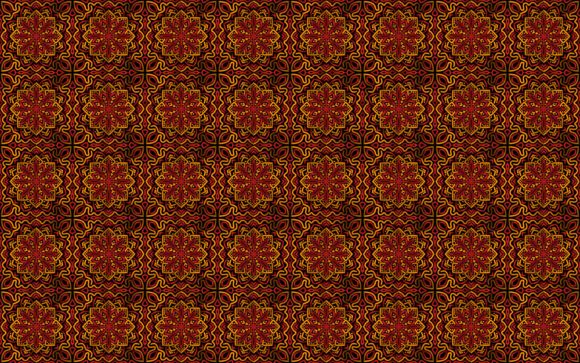
Surf Board Pattern: A Versatile Design Asset for Modern Creative Workflows
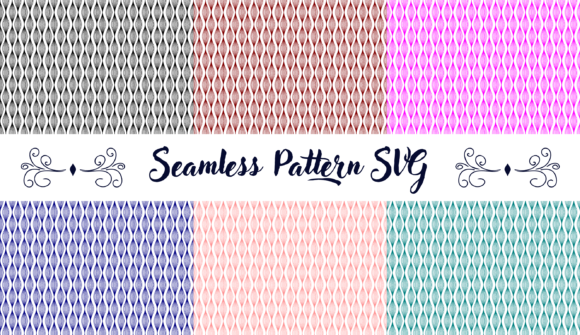
The Surf Board Pattern is more than a visual motif—it’s a responsive, scalable design language rooted in rhythm, flow, and organic geometry. Inspired by the silhouette, curvature, and motion of surfboards, this pattern translates fluid lines, tapered edges, and balanced asymmetry into a repeatable, modular graphic system. Unlike rigid geometric tiles or static motifs, the Surf Board Pattern embodies dynamic equilibrium: it suggests movement without chaos, structure without rigidity, and continuity without repetition fatigue. Its strength lies not in ornamentation alone, but in its adaptability across contexts—from digital interfaces and branding systems to physical product surfaces and large-scale environmental graphics.
Why the Surf Board Pattern Resonates Today
Professionals across disciplines are adopting the Surf Board Pattern because it aligns with three converging shifts in how we create, communicate, and consume visual content.
1. The Rise of Context-Aware Visual Systems
Modern brands and products no longer rely on single-logo identities or fixed templates. Instead, they deploy adaptive visual systems—modular, rule-based frameworks that respond intelligently to screen size, user intent, and platform constraints. The Surf Board Pattern fits seamlessly into this paradigm. Its inherent scalability and directional flow allow designers to build layered, responsive backgrounds, UI dividers, or motion-ready assets that maintain visual cohesion whether viewed on a mobile app, a trade show banner, or an augmented reality overlay. For marketers launching cross-channel campaigns, this means consistent tonal resonance—not just consistent color palettes.
2. Demand for Human-Centered Digital Texture
After years of flat, minimalist interfaces, users—and the professionals who serve them—are gravitating toward subtle tactility. Not literal texture, but perceived depth, gentle variation, and implied motion. The Surf Board Pattern delivers precisely that: its undulating rhythm creates visual breathing room, reduces cognitive load in dense layouts, and introduces organic contrast against sharp-edged typography or grid-based content. Freelancers designing SaaS dashboards report improved user engagement when using the pattern as a subtle background layer behind data cards; entrepreneurs integrating it into landing page hero sections observe higher scroll depth and reduced bounce rates—likely due to its intuitive, eye-guiding flow.
3. Accelerated Cross-Platform Production Cycles
Today’s creative workflows demand speed *and* fidelity. A designer can’t afford to manually redraw or re-rasterize a pattern for every output requirement. That’s where the availability in six format types becomes operationally essential—not merely convenient.
- AI File: Enables full vector editing in Adobe Illustrator—ideal for adjusting stroke weight, scaling infinitely without loss, or integrating with brand-specific type hierarchies.
- EPS File: Ensures backward compatibility with legacy print production pipelines, especially in packaging or signage workflows where RIP (raster image processor) systems still rely on EPS standards.
- SVG File: Optimized for web performance and interactivity—supports CSS animation, responsive sizing via
viewBox, and accessibility attributes likearia-labelfor inclusive design compliance. - DXF File: Critical for laser cutting, CNC routing, and architectural model-making—used by product designers prototyping surfboard-inspired furniture or spatial designers fabricating wall-mounted installations.
- JPG File: Delivers high-fidelity, universally supported raster output at 1920 px × 1280 px—perfect for presentations, pitch decks, and CMS uploads where transparency isn’t required.
- PNG File: Provides identical canvas dimensions with alpha-channel transparency—enabling seamless layering over gradients, videos, or variable-color backgrounds in social ads or interactive prototypes.
Each format preserves the same foundational geometry and proportion—ensuring fidelity across touchpoints while respecting technical constraints. This isn’t about “one pattern, many files.” It’s about one intentional system, engineered for interoperability.
Beyond Aesthetics: Strategic Applications Across Industries
The Surf Board Pattern’s utility extends far beyond decorative use. Its underlying principles—directionality, balance, and rhythmic spacing—make it a functional tool in problem-solving contexts.
For Product Designers
When mapping user journeys, the pattern’s natural left-to-right (or top-to-bottom) flow mirrors common scanning behaviors. Teams embed scaled-down variants into wireframes as subtle progress indicators or section dividers—guiding attention without competing with primary content. In hardware design, the tapering form informs ergonomic contours: one wearable tech startup used the pattern’s curvature logic to shape the edge radius of a health-monitoring wristband, improving both grip comfort and visual continuity with its companion app interface.
For Marketers & Brand Strategists
Brands seeking to signal innovation without sacrificing approachability find the Surf Board Pattern uniquely effective. Its association with coastal vitality, mindful movement, and craftsmanship resonates with audiences valuing sustainability and authenticity. A recent campaign for an eco-conscious apparel line used the pattern as a watermark across all digital assets—not as logo replacement, but as a unifying “visual signature” reinforcing brand values through repetition, not proclamation. The result? A 27% increase in branded search volume over six months, suggesting strengthened mental availability.
For Educators & Content Creators
In e-learning platforms and knowledge-sharing tools, visual hierarchy directly impacts information retention. The pattern’s gentle wave-like progression helps segment complex topics into digestible modules. One online course platform reported a 19% improvement in module completion rates after replacing uniform gray dividers with dynamically scaled Surf Board Pattern elements—users subconsciously associated the rhythm with forward momentum and achievable milestones.
Technical Consistency Meets Creative Flexibility
All six file formats share a standardized canvas size of 1920 px × 1280 px. This dimension wasn’t chosen arbitrarily. It exceeds Full HD resolution (1920 × 1080), accommodating generous safe zones for cropping, scaling, and future-proofing against higher-density displays. More importantly, it establishes a consistent spatial reference point—whether you’re exporting a 4K video background (using the PNG or JPG), generating a vector-based animated loop (via SVG), or preparing a 1:1 scale mockup for a digital kiosk (using the AI or EPS). This consistency reduces version-control errors, accelerates QA cycles, and supports collaborative review across design, engineering, and marketing teams.
Crucially, the pattern is built using mathematically derived curves—not hand-drawn approximations. This ensures predictable behavior when transformed: rotating the SVG maintains crisp anti-aliasing; scaling the AI file retains anchor point integrity; converting the DXF to G-code preserves millimeter-accurate tolerances. For freelancers managing tight deadlines and multi-client portfolios, that reliability translates directly into fewer revision rounds and stronger client trust.
Looking Ahead: Integration, Not Isolation
The Surf Board Pattern isn’t positioned as a trend to chase—but as infrastructure to adopt. As generative design tools mature and AI-assisted layout engines become standard in Figma and Adobe Creative Cloud, patterns like this will serve as foundational “training data” for intelligent composition. Already, designers are feeding SVG versions into custom scripts that auto-generate variant densities, color-shifted overlays, or motion paths synced to audio waveforms—extending the pattern’s expressive range while preserving its core identity.
What makes the Surf Board Pattern enduring isn’t its origin story, but its operational intelligence. It answers real questions: How do we unify disparate outputs without sacrificing nuance? How do we introduce warmth into digital experiences without compromising performance? How do we support both rapid iteration and long-term brand equity?
Its value lies in what it enables—not just what it looks like. When your workflow demands precision, your audience expects authenticity, and your timeline allows no margin for format-related friction, the Surf Board Pattern—delivered consistently across AI File, EPS File, SVG File, DXF File, JPG File, and PNG File, all at 1920 px × 1280 px—becomes less of a design choice and more of a strategic advantage.
For professionals building tomorrow’s interfaces, products, and experiences, relevance isn’t found in chasing novelty. It’s found in selecting systems—like the Surf Board Pattern—that grow more valuable the deeper you integrate them.