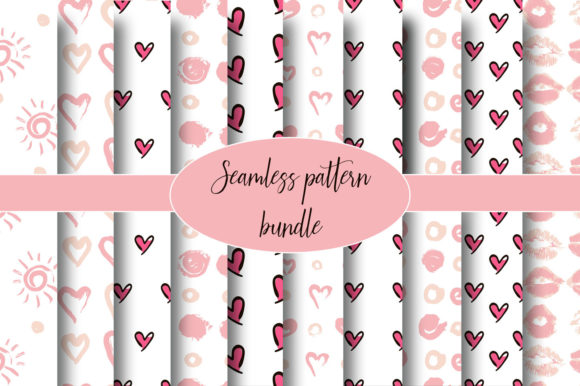
Seamless Pattern. Acrylic Paints, Brush: Hand-Drawn Texture for Authentic Creative Projects
Seamless Pattern. Acrylic Paints, Brush refers to a curated set of repeatable, hand-crafted design elements created using traditional media—specifically acrylic paints and physical brushes—then digitized with care to preserve texture, variation, and organic imperfection. Unlike algorithm-generated repeats or vector-only motifs, this collection emphasizes tactile authenticity: visible brushstrokes, subtle pigment granulation, and natural edge blending that survive the transition from paper to screen. It’s not just about repetition—it’s about continuity with character.
How It Differs From Other Seamless Pattern Approaches
Most seamless patterns fall into one of three categories: digitally generated (using software tools like Illustrator’s Pattern Maker), photobased (scanned fabric swatches or scanned textures), or fully vectorized illustrations designed for scalability but often lacking material nuance. Seamless Pattern. Acrylic Paints, Brush occupies a distinct middle ground: it begins in the physical world—with real paint applied to surface, layered, dried, and sometimes reworked—then captured at high resolution and carefully edited to tile without visible seams.
This approach yields results that sit between the precision of pure vector and the unpredictability of raw photography. For example, a pattern built from a scanned watercolor wash may offer rich tonal gradation but limited scalability; a purely vector heart motif scales infinitely but can feel sterile or generic. Seamless Pattern. Acrylic Paints, Brush retains painterly depth while maintaining clean tiling geometry—making it especially useful when you need both visual warmth and technical reliability.
Practical Strengths for Real-World Use
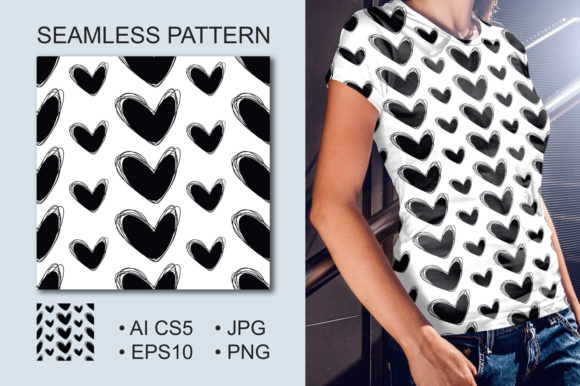
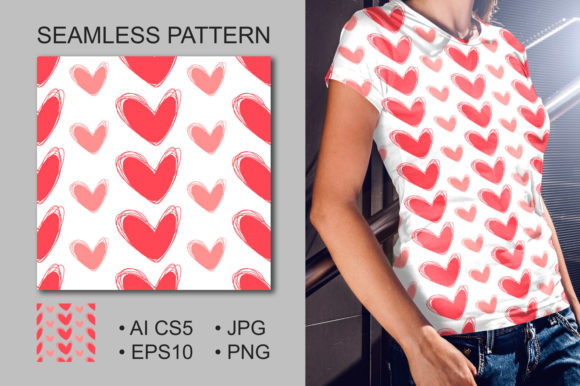
The set includes 10 original motifs, each delivered across four core formats: AI (CS5), EPS10, JPG (4000×4000px), and PNG (4000×4000px with transparency). This multi-format support reflects thoughtful preparation for varied production needs:
- AI and EPS files allow full vector editing—ideal for adjusting colors, isolating elements, or adapting scale for large-format prints like wall murals or fabric yardage.
- JPG files provide high-resolution raster versions suitable for print-on-demand platforms where vector upload isn’t supported—or when you need consistent color rendering across devices.
- PNG files with transparency enable flexible layering in digital illustration, social media graphics, or sticker design—especially valuable for customizing laptops, notebooks, or phone cases without background interference.
Each motif is sized at 1000×1000px in vector and 4000×4000px in raster, striking a balance between file manageability and output fidelity. That resolution supports sharp reproduction on products ranging from small stickers (where fine detail matters) to oversized tote bags (where pixel clarity holds up at 12–18 inch widths).
Where It Fits Best—and Where It Might Fall Short
Seamless Pattern. Acrylic Paints, Brush excels in contexts where emotional resonance and handmade credibility matter. Think Valentine’s Day product lines: greeting cards with soft-edged floral repeats, ceramic mugs with gently overlapping hearts, or stationery sets where texture implies care and intention. Because the originals were painted by hand—not traced, not auto-traced—the patterns avoid the uniformity common in mass-produced clip art. That makes them particularly effective for indie brands, craft-based Etsy sellers, or educators designing classroom materials that feel personal rather than templated.
However, this strength introduces tradeoffs. If your project demands absolute geometric precision—say, aligning pattern edges to millimeter tolerances on technical apparel textiles—hand-painted variations may require additional manual cleanup in Illustrator or Photoshop. Similarly, if you’re building a dynamic web background that must scale responsively across dozens of viewport sizes, SVG-based vector patterns (with embedded CSS control) may offer more flexibility than static AI/EPS files.
It’s also worth noting the creative scope: this is a focused, seasonal collection (Valentine’s Day-themed), not an expansive library. You’ll find hearts, roses, ribbons, and abstract love symbols rendered with acrylic softness—but not florals for spring, geometrics for modern interiors, or typographic repeats for branding systems. That focus is intentional: it supports cohesion and stylistic consistency, but limits versatility across non-romantic themes.
Comparing Output Formats for Your Workflow
Your choice among the included file types depends less on “which is best” and more on how your design pipeline functions:
- If you work primarily in Adobe Creative Cloud and plan to recolor, resize, or combine motifs with other vector assets, the AI CS5 and EPS10 files are your most adaptable starting point.
- If you use Affinity Designer, CorelDRAW, or non-Adobe tools, EPS10 offers broader compatibility than native AI files—though some advanced effects may flatten during import.
- If you’re preparing files for print vendors who request high-res JPGs (common for POD services like Printful or Redbubble), the 4000×4000px JPGs meet standard requirements without upsampling risk.
- If transparency is essential—for cut-out vinyl stickers, layered digital mockups, or overlaying onto photos—the PNGs eliminate background clipping steps.
The inclusion of a Read Me file with font and mockup links further supports practical integration. Knowing which typefaces were used helps maintain typographic harmony if you extend the designs; access to source mockups lets you preview how patterns translate to physical objects before committing to production runs.
When to Choose Seamless Pattern. Acrylic Paints, Brush—and When to Look Elsewhere
Choose this set if:
- You value tangible, human-made texture in digital assets—and want to avoid the “too perfect” look of AI-assisted or procedural repeats.
- Your timeline allows for moderate customization (e.g., minor color tweaks or layout adjustments) rather than plug-and-play deployment.
- You’re creating for tactile, gift-oriented markets—especially seasonal niches like Valentine’s Day—where warmth and sincerity influence buyer perception.
- You need reliable tiling behavior without sacrificing artistic integrity, and have access to basic vector/raster editing tools.
Consider alternatives if:
- You require hundreds of motifs across multiple themes (e.g., holidays, seasons, industries)—in which case a subscription-based pattern library may offer broader coverage.
- You’re developing for interactive or generative applications (like web animations or AR filters) where parametric control over pattern density, rotation, or color shifts is necessary.
- Your production environment restricts file types—for example, certain embroidery software accepts only DST or PES formats, which would require conversion beyond what’s provided.
- You prioritize ultra-minimalist or hyper-modern aesthetics—where crisp line work and stark contrast outweigh organic grain and soft edges.
Making It Work Across Mediums
The versatility of Seamless Pattern. Acrylic Paints, Brush becomes clearest when mapped to real applications. A single heart-and-rose motif, for instance, can serve as:
- A repeating background on canvas tote bags—its acrylic texture echoing the weave of natural fiber;
- A subtle watermark-like layer behind handwritten notes in a printable journal PDF;
- The base repeat for sublimation-printed hoodies, where pigment softness prevents harsh transitions under heat transfer;
- A layered element in Canva or Figma designs for social media posts, thanks to the transparent PNG option;
- A foundation for custom sticker sheets—cut precisely with die lines, yet retaining expressive brushwork at 3-inch width.
No format change is needed to move between these uses—just thoughtful selection of the right file type for each stage of your process.
Ultimately, Seamless Pattern. Acrylic Paints, Brush represents a deliberate, grounded approach to digital pattern-making: one that honors physical craft while meeting contemporary production standards. It won’t replace every pattern resource you own—but for projects where authenticity, seasonal warmth, and hands-on origin matter, it fills a space few others do with equal consistency.