Retro Music Pattern
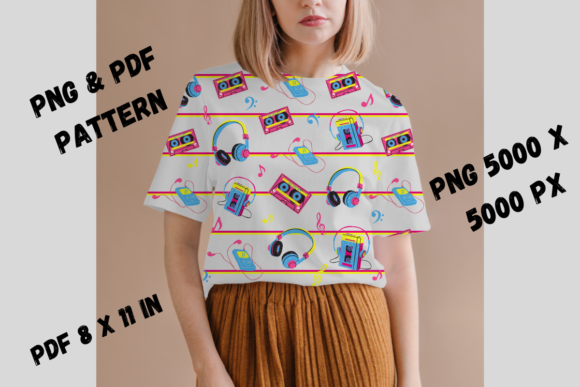
If you’ve ever paused a mixtape to sketch a layout, doodled cassette icons in the margins of your lesson plan, or designed a brand mood board that *feels* like neon-lit synth pop — you already know what Retro Music Pattern delivers. It’s not just a visual style. It’s a functional toolkit: four high-res seamless PNG patterns (5000px × 5000px) and four print-ready 8×11″ PDFs — all drenched in authentic 80s color palettes: electric teal, hot pink, sunset orange, and matte black with crisp white linework.
These aren’t nostalgic wallpaper fillers. They’re built for action — for people who need texture, rhythm, and personality in their real-world projects, fast.
Where This Pattern Fits Into Real Creative Work
Think about the last time you printed a set of custom stickers for your small-batch candle brand. Or the time you needed a background for a student podcast episode graphic — something that said “vintage audio” without looking like a museum exhibit. That’s where Retro Music Pattern bridges the gap between mood and utility.
The seamless PNGs scale cleanly across any digital canvas: social banners, Canva presentations, Notion headers, even Zoom virtual backgrounds. Because they’re 5000px square, they hold up sharp on retina displays and large-format prints — no pixelation when you blow them up for a 24×36″ classroom poster or a shop window decal.
The PDFs? Designed for immediate use in physical workflows. Load one into Cricut Design Space or Silhouette Studio and cut die-cut stickers in minutes. Print a sheet on sticker paper for a teacher’s reward system (“Earn a Mixtape Badge!”), or run it through a local print shop for custom notebook covers or event invitations — no design software required.
Real People, Real Projects — Right Now
A freelance educator uses the cassette-pattern PDF to design printable “Soundtrack Your Study Session” worksheets — students match musical eras to historical events while coloring in walkman silhouettes. The pattern adds cohesion without distracting from content, and the 8×11″ size fits standard copy machines.
A small-batch apparel maker overlays the iPod-pattern PNG onto mockups for limited-run T-shirts. Because it’s seamless and high-res, it tiles perfectly across chest prints or full-back designs — no awkward repeats or blurry edges. The cool 80s colors also pair naturally with garment dye techniques, giving screen-printed tees subtle depth.
A wedding planner pulls the headphones-and-cassette PDF into Illustrator to build a “First Dance Playlist” invitation suite. She masks parts of the pattern behind transparent text, creates foil-stamped RSVP cards, and exports individual elements as SVGs for laser-cut acrylic place cards. No stock vectors. No licensing headaches. Just consistent, ownable style.
A middle school media arts teacher downloads the files for a unit on analog vs. digital sound. Students use the patterns as backgrounds in stop-motion animation storyboards, then compare how texture changes perception of “old” versus “new.” One class even printed the cassette pattern on transparency film and projected it over live turntable footage — turning a tech lesson into a tactile, sensory experience.
Why These Specific Elements Matter — Not Just the Aesthetic
It’s not just about “80s vibes.” It’s about intentionality in motif selection. The Walkman icon speaks to personal, portable listening — perfect for branding wellness apps, journaling tools, or focus-based productivity products. The cassette tape loop suggests continuity, memory, and rewinding — ideal for storytelling brands, memoir publishers, or therapy practices building trust through narrative.
The iPod silhouette carries instant recognition but avoids trademark risk — it’s stylized enough to be original, familiar enough to land emotionally. And the retro headphones? Clean, gender-neutral, and scalable down to 12pt icons — great for app UI kits or educational flashcards.
That’s why these patterns work across so many contexts: they’re culturally resonant but functionally flexible. You’re not buying nostalgia — you’re buying shorthand that communicates tone, era, and attitude in under two seconds.
What to Consider Before You Use Them
First: Will this pattern support — not compete with — your message? If you’re designing a minimalist business card for a law firm, the hot pink cassette loop might overwhelm. But if you’re launching a vinyl subscription box or a retro-gaming café, it’ll reinforce authenticity instantly.
Second: How much editing do you actually need? These files are ready-to-use, but they’re also editable. Open the PDFs in Illustrator or Affinity Designer to recolor elements, isolate motifs, or combine layers. The PNGs work natively in Procreate, Figma, and Photoshop — meaning you can adjust opacity, add gradients, or mask sections without losing resolution.
Third: Who’s seeing it — and where? A pattern that looks vibrant on an Instagram Story may fade on uncoated paper. Test a small print first if you’re doing physical goods. And remember: seamless doesn’t mean invisible — at large scales, repetition becomes part of the design language. Lean into it. Let the rhythm of the pattern echo the rhythm of music itself.
More Than Background — It’s a Creative Accelerator
You don’t need to be a designer to benefit from Retro Music Pattern. You just need a project where consistency, speed, and character matter. A blogger curating a “Throwback Thursday” series drops the walkman pattern behind quote graphics — done in 90 seconds. A craft fair vendor uses the headphones PNG as a repeating border on handmade greeting cards — no new illustrations needed. A university communications team builds a campaign around “Listen to Student Voices” and uses the cassette loop as a unifying visual thread across posters, emails, and merch.
This is practical creativity: less time sourcing, more time expressing. Less worrying about copyright clearance, more confidence in cohesive output. Whether you’re prepping a classroom handout, prototyping a product label, or brainstorming a brand refresh, Retro Music Pattern gives you a head start — one that feels intentional, not generic.
And because it’s built for reuse — across formats, audiences, and platforms — it pays for itself the moment you skip hiring a designer for a single small job. That’s not just cost savings. It’s creative autonomy.