Ornament Seamless Pattern Design: A Practical Guide for Creative Projects
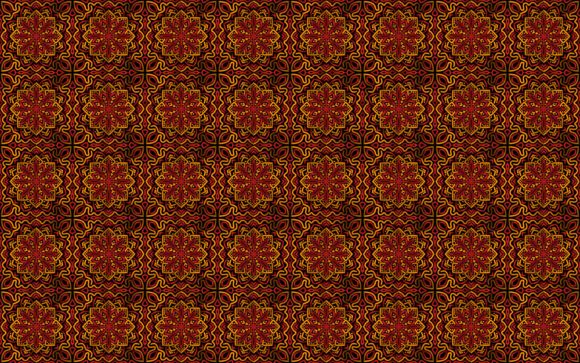
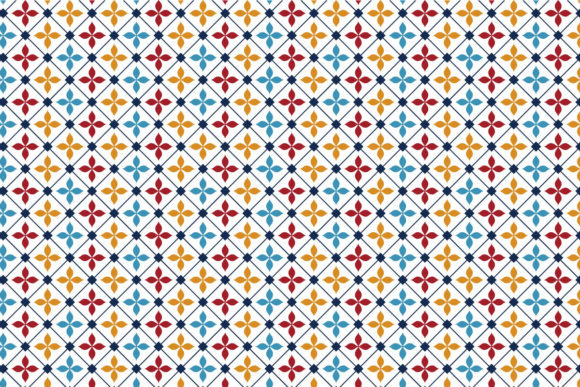
Ornament Seamless Pattern Design refers to a category of repeatable, tileable surface patterns built around decorative motifs—such as filigree, botanical flourishes, geometric borders, or stylized motifs inspired by Art Nouveau, Baroque, or contemporary illustration. Unlike standalone illustrations or raster-based repeats with visible seams, an Ornament Seamless Pattern Design is constructed so that edges align perfectly when tiled horizontally and vertically, eliminating visual breaks across surfaces. This technical precision enables consistent application across large-scale or modular formats—from wrapping paper rolls to wallpaper murals and fabric bolts.
What Sets Ornament Seamless Pattern Design Apart
The distinction lies in both aesthetic intent and technical execution. Ornament-based patterns emphasize intentional decorative language—not just repetition, but rhythm, balance, and layered visual interest. They often feature interlacing lines, symmetrical arrangements, or carefully weighted negative space that supports legibility at multiple scales. A well-executed Ornament Seamless Pattern Design maintains clarity whether printed at 2 inches square on a gift tag or scaled to cover a 10-foot wall. That scalability depends on vector construction (for crispness at any size) and thoughtful spacing between elements to avoid overcrowding or unintended optical vibration.
In contrast, many generic “seamless patterns” rely on photo textures, minimal geometry, or algorithmic noise—functional for background use but less suited for contexts where ornamentation carries meaning or cultural resonance. An Ornament Seamless Pattern Design invites closer looking. It’s chosen not only for coverage but for contribution: it adds warmth to bedding, sophistication to stationery, or festive energy to packaging—without requiring custom illustration each time.
Fitting the Pattern to Your Project
Not all projects benefit equally from ornament-focused repeats. The right fit depends on scale, material, viewing distance, and functional demand.
- Gift wrap and packaging: Ornament Seamless Pattern Design excels here because small-format printing emphasizes detail. A subtle damask or bold medallion repeat can elevate unbranded kraft paper or foil-lined boxes. However, overly dense ornament may obscure text or branding unless paired with ample margin space or simplified variants.
- Wallpaper and wall decals: Medium-to-large scale repeats (e.g., 12–24 inch tiles) work best for walls. Ornament Seamless Pattern Design supports both traditional match-and-trim installation and modern peel-and-stick formats—provided the pattern density allows for visual breathing room. Highly intricate repeats risk fatigue in large rooms unless balanced with solid-color accents or furniture with clean lines.
- Bed sheets, duvet covers, and upholstery fabric: Durability and wash performance matter. Ornament Seamless Pattern Design translated into woven or digital-printed textiles must account for thread count, dye absorption, and repeat alignment during cutting. Simpler ornament motifs (e.g., spaced laurel wreaths or linear acanthus borders) tend to hold up better over time than ultra-fine line work that may blur after repeated laundering.
- Digital backdrops and web graphics: Vector-based Ornament Seamless Pattern Design scales flawlessly for websites, social media banners, or presentation templates. But screen resolution and loading speed mean lightweight SVGs or optimized PNGs are preferable over high-res TIFFs—even if the original design was created at print resolution.
Comparing Approaches: When Ornament May Not Be the First Choice
Ornament Seamless Pattern Design is one option among several for surface decoration. Understanding alternatives helps clarify its appropriate role.
A minimalist geometric repeat—like evenly spaced dots, clean chevrons, or low-contrast tonal gradients—offers neutrality and broad compatibility. It’s often preferred for corporate branding, healthcare environments, or modern interiors where visual calm takes priority over decorative emphasis. Ornament-based designs, by contrast, introduce personality and historical texture. They’re less “invisible” and more expressive—a strength in lifestyle branding or artisanal retail, but potentially distracting in contexts demanding restraint.
Photographic or scanned-texture repeats (e.g., marble veining, watercolor washes, or linen weaves) provide organic authenticity but lack the structural predictability of ornament-based tiling. Their seams are often masked through blending rather than true mathematical alignment—making them less reliable for precise edge-matching in large installations or multi-panel applications.
Hand-drawn or generative AI-assisted patterns offer novelty and rapid iteration, yet they frequently sacrifice the deliberate spacing and symmetry essential to successful ornamentation. Without manual refinement, AI-generated ornament repeats can feel disjointed or top-heavy—elements cluster in one quadrant, or line weights vary unpredictably across the tile boundary. A professionally crafted Ornament Seamless Pattern Design addresses these issues deliberately, balancing variation with consistency.
Key Decision Factors to Weigh
Before selecting or commissioning an Ornament Seamless Pattern Design, consider these practical factors:
- Intended output medium: Will it be printed on uncoated paper, heat-transferred to polyester fabric, or UV-cured onto vinyl? Each substrate affects how fine lines, thin gaps, or overlapping layers reproduce. Test prints—even small swatches—are invaluable.
- Color complexity: Ornament designs with 5+ spot colors may increase printing costs significantly for short runs. Digital printing offers more flexibility, but color fidelity still varies across devices and papers. A 3–4 color palette often delivers richness without logistical friction.
- Customization needs: Some Ornament Seamless Pattern Designs are sold as fixed assets; others are delivered as layered vector files (e.g., Illustrator .ai), allowing recoloring, element repositioning, or motif isolation. If you plan to adapt the pattern for sub-brands or seasonal updates, editable source files are essential.
- Licensing scope: Commercial use rights differ widely. A license permitting unlimited physical product runs may exclude resale of the pattern file itself—or restrict use in SaaS platforms. Clarify whether your application falls under standard, extended, or exclusive terms before finalizing.
Real-World Tradeoffs in Practice
A stationery designer sourcing patterns for luxury greeting cards might choose an Ornament Seamless Pattern Design with gold foil-blocking potential—knowing that the fine linework requires a higher-grade paper stock and tighter press registration. The tradeoff: elevated perceived value versus narrower printer compatibility and slightly longer production lead times.
Conversely, a small-batch apparel brand launching a summer collection may opt for a simplified ornament repeat—think stylized sunbursts or linked shells—optimized for DTG (direct-to-garment) printing. Here, the tradeoff is reduced intricacy for faster turnaround and broader fabric compatibility, including cotton blends that don’t hold ultra-fine detail as crisply as premium poplin.
Neither choice is objectively better. One prioritizes tactile distinction; the other prioritizes agility. Ornament Seamless Pattern Design becomes most valuable when its defining traits—intentional decoration, seamless scalability, and stylistic cohesion—align directly with project goals rather than serving as default decoration.
When to Look Beyond Ornament
Consider alternatives if your project requires:
- Maximum versatility across monochrome and full-color outputs (e.g., logos needing single-color embroidery)
- High contrast for accessibility compliance (ornament repeats with low-value contrast can fail WCAG thresholds)
- Dynamic scaling across responsive web layouts where fixed-repeat behavior creates awkward cropping
- Fast prototyping with no access to vector editing tools (some ornament patterns require basic Illustrator or Affinity Designer knowledge to adjust spacing or hue)
In those cases, a modular grid system, scalable icon set, or parametric pattern generator may offer more flexibility—though without the curated voice an Ornament Seamless Pattern Design provides.
Ultimately, Ornament Seamless Pattern Design serves best when decoration is part of the message—not just background, but intention. It rewards attention to craft, benefits from thoughtful adaptation, and gains strength through consistency across touchpoints. Used with awareness of its strengths and boundaries, it remains a durable, expressive tool for designers, makers, and brands building identity through surface.