Makeup and Cosmetic Pattern Icon Design
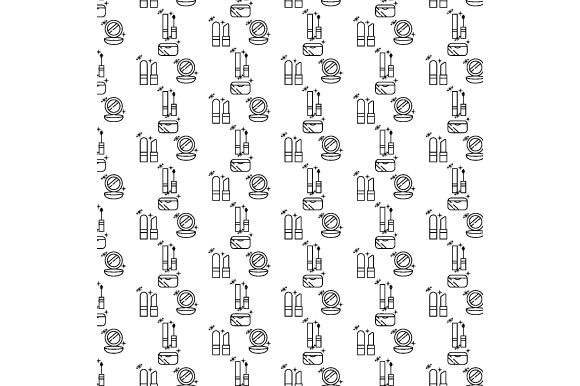
If you’ve ever designed a beauty blog header, mocked up packaging for a new lipstick line, or built a printable planner for skincare routines—you know how much time goes into finding the right visual language. That’s where Makeup and Cosmetic Pattern Icon Design steps in: not as a single image, but as a flexible, scalable toolkit of icons and repeating motifs inspired by cosmetics—think lipsticks, mascara wands, blush brushes, compacts, palettes, and stylized makeup dots, swirls, and gradients—all arranged into seamless patterns or clean standalone icons.
What makes this resource different from generic beauty vectors? It’s built for real workflows. The files you get—AI, EPS, JPG, and PNG—mean you can scale without blur for print labels, drop transparent icons into Canva social posts, edit colors in Illustrator for brand alignment, or place high-res JPGs directly into PDF lookbooks. No pixelation. No licensing guesswork. Just ready-to-deploy design assets grounded in actual cosmetic aesthetics—not abstract shapes dressed up as “beauty.”
When You’ll Reach for These Icons (and Why They Stick)
You don’t need a big launch to use these. In fact, most people reach for Makeup and Cosmetic Pattern Icon Design during quiet, practical moments: while prepping a client presentation at 9 a.m., tweaking an Etsy shop banner at midnight, or designing classroom handouts for a high school cosmetology unit. Here’s how it shows up across real scenarios:
- A freelance graphic designer uses the seamless pattern files as subtle background texture behind product photography—softening white space on a serum bottle mockup without competing with the main visual.
- A small-batch skincare entrepreneur pulls individual PNG icons to label ingredient cards at a local farmers’ market booth—no need to hire an illustrator for consistent, on-brand visuals.
- An educator teaching digital design imports the AI file into Adobe Illustrator labs so students can practice recoloring, resizing, and combining elements—learning vector fundamentals using relevant, engaging subject matter.
- A blogger curating a “5-Step Night Routine” carousel drops transparent PNG icons beside each step—no cropping, no shadow adjustments, just instant clarity and visual rhythm.
- A publisher laying out a wellness magazine spread tiles the EPS pattern as a light border around a feature on clean beauty brands—adding thematic cohesion without overwhelming editorial content.
Where Print and Digital Needs Overlap (and How These Files Bridge Them)
One of the quiet strengths of Makeup and Cosmetic Pattern Icon Design is how it handles transitions between formats. That EPS file isn’t just for large-format printing—it’s also what lets you export crisp SVGs for website loaders or animated icon sets. The PNG comes with alpha transparency, so it works equally well over a pastel Instagram story background or a dark-mode email template. And the JPG? It’s your go-to when you’re uploading to platforms that don’t accept vector uploads—like certain e-commerce CMS dashboards or basic newsletter builders.
This flexibility matters because your needs shift constantly. Today you might be ordering business cards with a faint lipstick-dot pattern in the corner (EPS + CMYK conversion). Tomorrow, you’re sharing a Reel thumbnail with bold, centered lipstick and brush icons (PNG + overlay text). The same source files support both—no re-downloading, no version confusion, no hunting for “the right format.”
What to Check Before You Use Them
Before dropping any icon or pattern into your project, ask yourself three quick things:
- Is the color palette aligned—or easily adjustable? These files are typically delivered in editable vector formats (AI/EPS), so you can shift hues to match Pantone swatches or HEX codes in seconds—but only if you’re working in compatible software. If you’re mostly in Canva or Google Slides, stick with the PNGs and plan color tweaks before download.
- Does the scale match your context? A delicate eyelash motif looks elegant at 8 pt on a luxury gift tag—but disappears entirely at that size on a trade show banner. Preview how icons render at your intended output size, especially in print. When in doubt, start with the vector files and scale up.
- Are usage rights clear for your purpose? Most reputable sources grant broad commercial use—but double-check whether social media ads, merchandise resale, or app UI integration fall under the license. If you’re designing for a client, confirm whether they need their own license or if your purchase covers derivative work.
Real People, Real Outcomes—Not Just “Pretty Graphics”
We’ve seen users go from frustrated scrolling through low-res Pinterest pins to shipping cohesive brand assets in under two hours—because they had one reliable folder of Makeup and Cosmetic Pattern Icon Design files instead of ten half-matched downloads. One esthetician used the pattern as wallpaper for her Zoom background during virtual consultations—clients noticed the polish and asked where she got it. A student entered a design contest with a poster built entirely from recolored icons—and won third place for “visual storytelling with restraint.”
None of those outcomes came from the icons themselves. They came from having tools that behaved predictably, matched the subject matter authentically, and saved mental bandwidth. That’s the quiet value: less time troubleshooting file compatibility, more time focusing on messaging, audience connection, or product development.
How to Make the Most of What You Get
Start simple. Open the AI file first—even if you don’t use Illustrator daily. Scroll through layers. Notice how icons are grouped, how patterns repeat, how strokes are built. Then try one thing: change the base color of a blush brush icon and export it as a PNG. Drop it into a document. See how fast it integrates.
Next, test the pattern tile. Place it in Photoshop or Affinity Photo, set blending mode to “Multiply” at 8% opacity, and drag it behind a photo. Instant depth—no filters needed. That’s when you realize these aren’t just decorative extras. They’re functional design infrastructure—built for beauty professionals, educators, creators, and anyone who communicates visually about cosmetics, self-care, or personal expression.
Whether you’re refreshing a Shopify store, illustrating a workshop handout, or building a mood board for a new fragrance line, Makeup and Cosmetic Pattern Icon Design meets you where you are—with clean files, intuitive structure, and zero visual noise. It doesn’t shout. It supports. And in design work, that kind of quiet reliability is rare—and deeply useful.