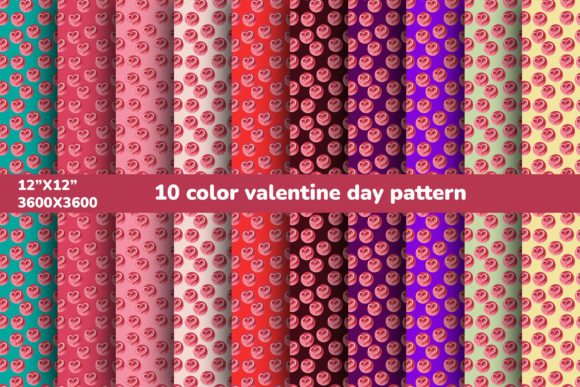
Elephant with Heart Shape Design Pattern: A Thoughtful Choice for Valentine’s Creative Projects
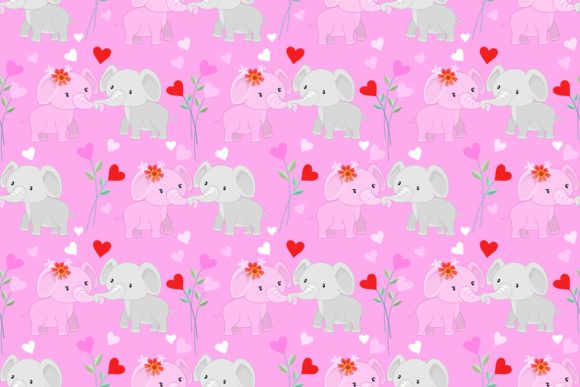
The Elephant with Heart Shape Design Pattern is a seamless, repeatable motif that pairs the symbolic weight of elephants—often associated with loyalty, memory, and enduring bonds—with the universal language of the heart. Unlike generic romantic patterns featuring roses or cupids, this design integrates meaningful iconography into a cohesive, scalable layout. Each elephant is stylized with gentle curves and soft proportions, and the heart shape appears either as a subtle negative space within the elephant’s silhouette, as an integrated element in its trunk or chest, or as a floating companion motif arranged rhythmically across the repeat. The result is a design that feels tender without being saccharine, timeless without being clichéd.
How It Stands Apart from Other Valentine-Themed Patterns
Many Valentine’s Day patterns lean heavily on typography (“XOXO”, “Love”), literal symbols (cupid arrows, interlocking rings), or botanical motifs (roses, cherry blossoms). While these have their place, they often lack narrative depth or cultural resonance beyond the immediate holiday. In contrast, the Elephant with Heart Shape Design Pattern draws from cross-cultural associations: in many traditions, elephants represent wisdom, protection, and lifelong partnership—qualities that align closely with mature, lasting love. This makes it especially resonant for couples celebrating anniversaries, weddings, or milestone years together—not just February 14th.
Compared to abstract watercolor hearts or minimalist line-art hearts, this pattern offers more visual texture and storytelling potential. It also avoids the fragility implied by delicate florals or handwritten scripts. The elephants ground the design in strength and stability, balancing the tenderness of the heart motif. That duality—softness and substance—is what gives the pattern its quiet versatility.
Practical Fit Across Materials and Uses
The delivered files—a 5000 × 5000 px JPG and an EPS 8 vector—support both digital and physical applications with precision. The high-resolution raster file works reliably for large-format printing: think wallpaper murals, fabric backdrops for photo studios, or gift wrap printed on kraft or matte stock. The EPS format retains full scalability and editability in vector-based tools like Adobe Illustrator or Affinity Designer, making it ideal for adapting to custom garment panels, embroidery digitizing, or packaging die-lines.
For textile use, the seamless repeat ensures no visible joins when tiled across fabric bolts—critical for quilting cotton, linen blends, or stretch jersey used in apparel. When applied to gift wrapping, the pattern reads clearly at both close range (on small boxes) and distance (on oversized gift bags), thanks to its balanced scale and consistent spacing. As a digital background—whether for Zoom virtual events, social media banners, or printable cards—the design holds clarity without overwhelming text overlays.
Where It Excels—and Where Alternatives Might Be Better
This pattern shines in contexts where emotional resonance and craftsmanship matter. For example, a small-batch stationery brand creating wedding invitations might choose the Elephant with Heart Shape Design Pattern over a floral repeat because it signals intentionality and longevity—not just romance, but commitment. Similarly, a boutique home goods label developing a limited-run pillow collection could use it to differentiate from mass-market heart prints, appealing to customers who value symbolism over trendiness.
However, it may be less suitable where immediacy or broad demographic appeal is essential. A school fundraiser selling bulk Valentine’s cards to children aged 6–10 might find the elephant motif too subtle or unfamiliar compared to bold, cartoonish hearts or animal characters with exaggerated expressions. Likewise, designers needing ultra-modern, gender-neutral aesthetics—think monochrome geometry or kinetic typography—may prefer minimal linear patterns over illustrative motifs, even symbolic ones.
Another consideration is color flexibility. While the base pattern is typically delivered in editable vector form (allowing full hue adjustment), some users expect pre-built palettes—pastel gradients, deep jewel tones, or monochrome variants. If your workflow relies on ready-to-use colorways rather than in-house recoloring, you’ll need to factor in time or resources for palette development.
Comparing File Formats and Their Real-World Impact
The inclusion of both JPG and EPS formats reflects thoughtful preparation—but each serves distinct roles. The JPG is production-ready for print-on-demand services that don’t accept vector files, such as certain fabric printing platforms or online gift wrap vendors. Its 5000 × 5000 px resolution supports crisp output up to ~17" × 17" at 300 dpi, covering most standard wallpaper drops and medium-sized textile repeats.
The EPS 8 file, meanwhile, allows for precise manipulation: adjusting individual elephant strokes, isolating heart elements for embroidery fill patterns, or integrating parts of the motif into larger layouts (e.g., adding names or dates within the heart shapes). It’s compatible with industry-standard vector software, though users relying exclusively on raster editors like Photoshop or free tools like Gravit Designer will need to convert or trace the EPS first—adding a small but nontrivial step.
If your projects routinely involve heavy customization—changing stroke weights, combining with typography, or exporting for laser cutting—the EPS is indispensable. If you primarily need plug-and-play application for pre-set templates, the JPG may be sufficient.
Design Integrity and Cultural Sensitivity
Well-executed elephant motifs avoid caricature: ears are proportionate, trunks curve naturally, and postures suggest calm presence—not circus performance or exoticism. The Elephant with Heart Shape Design Pattern follows this principle, using clean outlines and balanced negative space rather than exaggerated features or stereotyped poses. That restraint supports respectful usage across diverse audiences and contexts—from interfaith wedding stationery to inclusive classroom decorations.
This matters when evaluating alternatives. Some heart-themed animal patterns rely on anthropomorphism (hearts worn as bowties, elephants holding hearts like trophies), which can unintentionally infantilize or trivialize the symbolism. In contrast, integration—where the heart emerges organically from form—supports dignity and subtlety.
Making the Right Choice for Your Project
Ask yourself three questions before selecting the Elephant with Heart Shape Design Pattern:
- Does your audience connect with symbolic depth over surface-level charm? If yes—especially for milestones like engagements, vow renewals, or long-term relationship celebrations—this pattern offers quiet sophistication.
- Do you need flexibility across scales and substrates? From fabric swatches to wall murals, its seamless construction and dual-format delivery support wide-ranging execution.
- Is your workflow equipped to handle vector editing—or are you comfortable adapting raster files? Understanding your technical capacity helps determine whether the EPS adds value or complexity.
If the answer to two or more is “yes,” the pattern is likely a strong fit. If your priority is speed over nuance—say, producing 100 identical greeting cards in under an hour—simpler, more automated heart patterns may reduce friction. Likewise, if your project requires seasonal flexibility (e.g., repurposing the same design for Mother’s Day or Friendship Day), consider whether the elephant-heart pairing translates meaningfully beyond Valentine’s context—or whether a more modular motif would serve longer-term needs.
Ultimately, the Elephant with Heart Shape Design Pattern isn’t about decoration alone. It’s a considered tool—one that invites reflection on what love means across time, culture, and personal history. When matched thoughtfully to purpose, audience, and execution capability, it becomes more than background: it becomes part of the story you’re helping others tell.