Brown Gothic Damask Digital Paper: A Textural Foundation for Authentic Rustic-Chic Design
Texture carries meaning. In visual communication, the subtle grain of aged paper, the quiet repetition of a damask motif, or the soft imperfection of distressing can silently convey heritage, intentionality, and emotional resonance. Brown Gothic Damask Digital Paper exemplifies this principle—not as a decorative afterthought, but as a foundational design element rooted in material authenticity and functional versatility. Comprising 12 individually crafted digital papers, this collection bridges historical reference with contemporary digital workflow needs, offering designers, crafters, educators, and small business owners a tactile language they can deploy across both physical and screen-based projects.
Material Intelligence Embedded in Each File
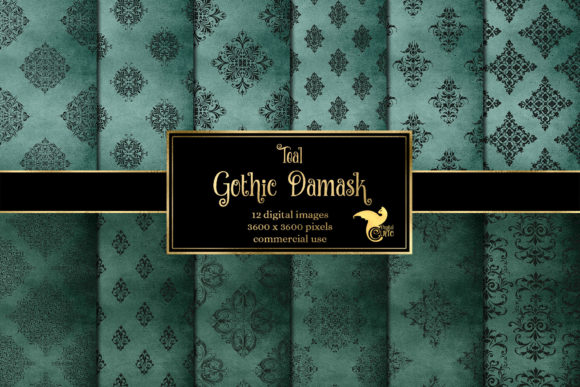
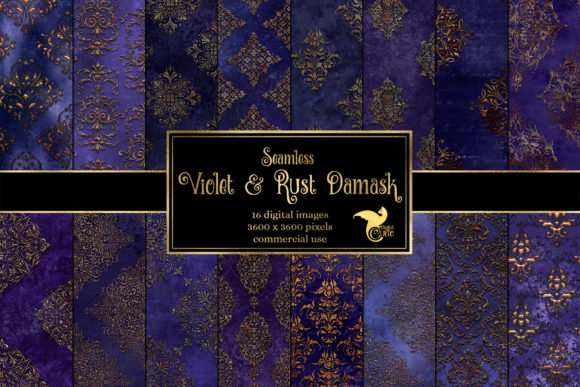
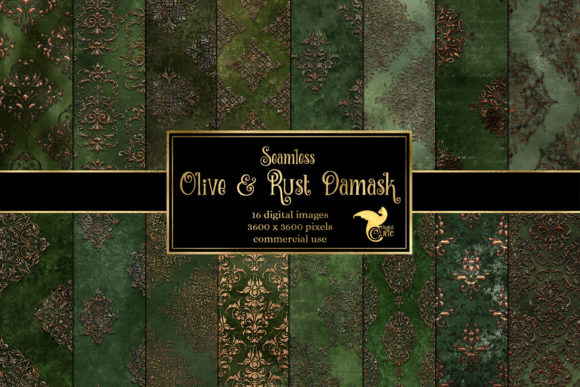
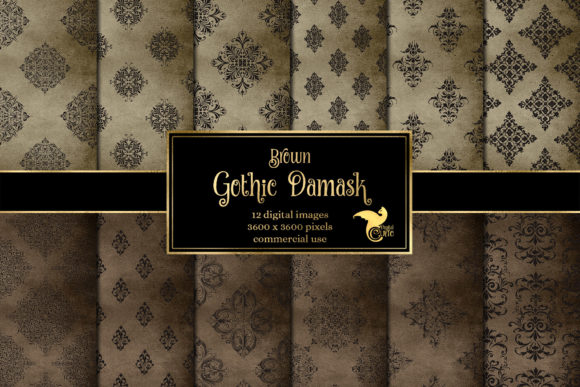
Each of the 12 Brown Gothic Damask Digital Paper files is more than a static image—it’s a carefully calibrated artifact. Measuring exactly 12 × 12 inches (30.5 × 30.5 cm) at 300 dpi, every texture renders with print-ready fidelity. At 3600 × 3600 pixels, they retain clarity even when scaled for large-format applications like backdrop prints or invitation suites. The resolution ensures crisp detail in fine damask linework and nuanced tonal shifts across the distressed brown base—critical when layering typography or overlaying foil-stamped elements.
Crucially, these are not seamless tiles. This intentional limitation reflects real-world material behavior: vintage wallpaper doesn’t repeat invisibly; aged ledger paper shows irregular wear; antique book endpapers bear unique creases and discolorations. By preserving non-repeating edges and organic variation between files, Brown Gothic Damask Digital Paper supports compositional honesty—encouraging thoughtful placement over automated tiling, and reinforcing a hand-crafted aesthetic rather than digital uniformity.
Why Distressed Brown? Contextual Function Over Trend
The choice of brown isn’t merely chromatic—it’s contextual. Warm, earthy browns evoke parchment, leather bindings, oxidized copper, and weathered wood. When layered with Gothic damask—a pattern historically associated with ecclesiastical textiles, 19th-century mourning stationery, and Victorian interior grandeur—the resulting palette communicates gravitas, timelessness, and restrained elegance. This makes Brown Gothic Damask Digital Paper especially effective where visual tone must balance sophistication with approachability: think wedding stationery that feels heirloom-quality without appearing somber, or educational materials on medieval art history that ground abstract concepts in tangible, sensory reference.
Distressing further deepens functionality. Subtle cracks, soft vignetting, ink bleed simulations, and uneven tonal aging aren’t flaws—they’re cues. They signal handmade origin, invite closer inspection, and create natural focal hierarchy when paired with clean typography. For example, a workshop handout printed on matte cardstock using one of these textures immediately signals “curated content,” distinguishing it from mass-produced PDFs—without requiring additional design labor.
Adaptation Across Disciplines: From Classrooms to Commerce
Design assets gain value through interoperability—and Brown Gothic Damask Digital Paper demonstrates exceptional cross-disciplinary utility.
- Wedding & Event Professionals: Used as background layers in invitation suites, menu cards, or ceremony programs, these textures add dimensionality without competing with calligraphy or monograms. Because each file is distinct, couples can assign specific papers to different components—e.g., a deeply grained variant for save-the-dates, a softer damask for RSVP cards—creating subtle narrative progression across the suite.
- Scrapbookers & Mixed-Media Artists: The 300 dpi resolution allows high-fidelity printing on specialty papers (vellum, kraft, or cotton rag), while JPEG compatibility ensures seamless import into digital scrapbooking software like Photoshop Elements or Affinity Photo. Artists report using them as underlays beneath watercolor scans or as masks for selective texture application—preserving brushstroke integrity while adding archival warmth.
- Educators & Curriculum Designers: History teachers incorporate these papers into timeline visuals or primary source facsimiles; literature instructors use them as backgrounds for annotated Gothic novel excerpts. The textures serve cognitive anchoring—students associate visual weight with thematic gravity, improving retention of complex narratives about Romanticism or Victorian social structures.
- Small Business Branding: Artisanal coffee roasters, independent bookshops, or heritage textile studios apply these papers to product labels, packaging inserts, or web banners. Unlike generic stock textures, Brown Gothic Damask Digital Paper avoids visual cliché—its specificity reinforces brand authenticity without requiring custom illustration investment.
- Digital Product Developers: UI/UX designers repurpose cropped sections as subtle background elements in dashboard interfaces for cultural institutions or academic platforms. The low-contrast brown-on-brown variation provides visual interest without compromising readability—unlike high-saturation patterns that fatigue users during extended interaction.
Workflow Integration: Practical Considerations
Adopting Brown Gothic Damask Digital Paper requires minimal technical overhead—but yields maximum creative leverage when aligned with intentional practice.
First, file management matters. Because the set includes 12 discrete JPEGs—not layered PSDs or editable vectors—users benefit from establishing a consistent naming convention (e.g., “BGD_Damask_07_DarkGrain.jpg”) to support rapid retrieval during tight deadlines. Embedding metadata (via Adobe Bridge or ExifTool) with keywords like “rustic,” “vintage,” “wedding texture,” or “educational background” further streamlines future reuse.
Second, color mode awareness prevents output surprises. While JPEGs are RGB by default, their 300 dpi resolution makes them suitable for CMYK print workflows—provided users convert color space *after* final composition in their layout software (InDesign, Illustrator) rather than within the texture file itself. This preserves tonal integrity and avoids unintended shifts in brown saturation.
Third, scaling discipline enhances impact. These papers shine most when used at or near native size. Enlarging beyond 12 × 12 inches risks pixelation; shrinking below 6 × 6 inches diminishes textural nuance. Designers working on responsive web backgrounds often export two versions: a full-size 3600px version for desktop, and a 1800px variant for tablets—both retaining the original aspect ratio and avoiding interpolation artifacts.
Comparative Utility: When This Set Fits—And When It Doesn’t
No single texture library serves every need—and recognizing Brown Gothic Damask Digital Paper’s precise niche strengthens its strategic application. It excels where warmth, historical resonance, and tactile suggestion are priorities. It is less optimal for contexts demanding clinical precision (e.g., medical infographics), vibrant modern branding (e.g., tech startup dashboards), or seamless surface coverage (e.g., tileable website backgrounds requiring infinite scroll compatibility).
This distinction matters practically. A graphic designer sourcing textures for a luxury candle brand might pair Brown Gothic Damask Digital Paper with a minimalist serif and unbleached cotton label stock—reinforcing natural materiality. Conversely, that same designer would likely choose a geometric monochrome pattern set for a fintech client’s investor presentation, where clarity and forward-looking energy take precedence over nostalgic cues.
Longevity Through Intentional Use
Digital assets age—not in pixels, but in relevance. Brown Gothic Damask Digital Paper maintains enduring utility because it avoids trend-driven exaggeration. Its distressing is restrained, not chaotic; its damask motifs are legible, not overwhelming; its brown palette is versatile, not monochromatic. Educators have reused these same files across five academic years in evolving lesson plans. Wedding designers report clients requesting “that warm, old-book texture” years after their initial purchase—proof that authenticity outlasts novelty.
Moreover, the set’s fixed scope—12 files, no subscriptions, no updates—supports sustainable creative practice. Users invest once, integrate deeply, and build institutional knowledge around specific textures. This contrasts with algorithmically generated texture libraries where endless variation dilutes decision-making and increases cognitive load. With Brown Gothic Damask Digital Paper, curation replaces consumption.
Implementation Beyond Decoration
At its most powerful, this collection functions not as decoration but as structural scaffolding. A researcher designing a conference poster on 19th-century textile trade routes might use one paper as the base layer, then overlay translucent maps and archival illustrations—allowing the damask rhythm to echo woven fabric structure while the brown ground evokes shipping crates and warehouse ledgers. A ceramicist documenting glaze experiments could use the textures as consistent backgrounds for product photography, creating visual continuity across social media posts without relying on artificial filters.
In each case, Brown Gothic Damask Digital Paper does more than “look nice.” It participates in meaning-making—anchoring digital work in material history, supporting narrative cohesion, and extending the expressive vocabulary available to creators who value substance alongside aesthetics.