Alphabet 2 Counted: Large, Print-Ready Cross-Stitch Charts
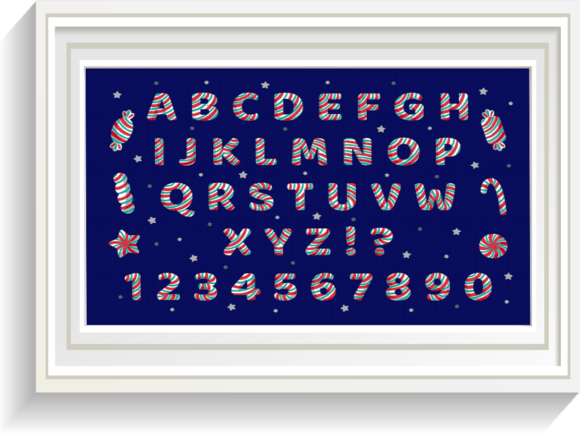
If you're stitching a bold, high-impact alphabetic design—whether for a nursery wall, a custom business banner, or a framed gift—you need clarity, consistency, and confidence in every stitch. Alphabet 2 Counted delivers exactly that: a meticulously charted, full-stitch cross-stitch pattern designed for precision and ease, not guesswork. No half stitches. No backstitching. Just clean, readable charts built for real-world use—and three distinct PDF versions so you can choose the format that fits your workflow, lighting, eyesight, or fabric setup.
Why Chart Clarity Matters More Than You Think
Stitching a 630 × 420 grid isn’t trivial—it’s 264,600 individual crosses. When your chart lacks contrast, uses tiny symbols, or buries color references in footnotes, fatigue sets in fast. That’s where Alphabet 2 Counted stands apart. Each of its three downloadable PDFs serves a specific purpose:
- Chart 1: Symbols over colors—ideal for stitchers who rely on symbol recognition but want immediate visual cues. DMC colors appear as soft background tints beneath clear black symbols, reducing eye strain during long sessions.
- Chart 2: Black symbols over white—the go-to for sharp monochrome printing, high-contrast screens, or those using assistive tools like magnifiers or screen readers. Every symbol is crisp, scalable, and unambiguous.
- Chart 3: Color blocks—a pixel-perfect color reference layout, showing solid swatches aligned to the grid. Use it alongside the other charts to verify transitions, preview shading flow, or double-check adjacent hues before threading.
Because all three are vector-based PDFs, you can scale them to any size—print a 4×6-inch quick-reference sheet or an 11×17-inch wall chart without blurring or loss of detail. No resizing compromises. No “zoom until it breaks.” Just clarity, preserved.
Designed for Real Fabric, Not Just Pixels
This isn’t a digital-only concept. Alphabet 2 Counted is charted specifically for 14-count Aida or linen—meaning each stitch lands cleanly, consistently, and predictably across a 45″ × 30″ finished piece. That size makes it viable for large wall art, event backdrops, or collaborative group projects (think school libraries, maker fairs, or team-building workshops). The full-stitch-only structure eliminates ambiguity: no fractional stitches to interpret, no optional outlines to debate. What you see on the chart is what you stitch—nothing more, nothing less.
And because it uses only 17 DMC cotton floss colors, material planning stays simple. The included floss usage report tells you *exactly* how many skeins you’ll need per color—not estimates, not ranges. For example, DMC 3865 (medium teal) appears in 22,480 stitches and requires 3 full skeins; DMC 745 (ivory) anchors the background with 94,200 stitches and needs 8 skeins. This level of granularity helps avoid mid-project shortages, last-minute store runs, or inconsistent dye lots—all common pain points in large-scale stitching.
Who Benefits Most—and How
Small business owners building branded merchandise appreciate how Alphabet 2 Counted supports reproducible, professional results—whether stitching logos for boutique packaging or creating limited-edition wall art for retail spaces. The clean, scalable charts mean one file works for prototyping *and* production.
Educators and therapists find value in the predictable rhythm of full stitches and high-contrast layouts. It’s accessible for teens learning fine motor control, adults in cognitive rehab, or neurodivergent stitchers who thrive with structured visual input. The absence of backstitching lowers cognitive load without sacrificing impact.
Freelance designers and content creators use the color-block chart as a ready-made palette reference—dragging swatches into Canva, Illustrator, or Procreate to maintain brand alignment across digital and physical outputs. The DMC numbers map directly to industry-standard color libraries.
Even seasoned stitchers benefit: the tri-format system lets you switch modes mid-project. Stuck on a subtle transition between DMC 3011 and 3012? Flip to Chart 3. Need to mark progress on a laminated print? Chart 2’s black-on-white holds up under highlighter marks. Prefer working from a tablet? Zoom Chart 1 without losing symbol legibility.
Practical Considerations Before You Begin
While Alphabet 2 Counted excels in clarity and scalability, it’s important to match it to your context. Because it’s charted for 14-count fabric, stitching on 18-count or linen will shrink the final dimensions—and may make symbols harder to track unless you adjust your viewing distance or zoom level. If you routinely work on finer counts, consider whether this scale meets your presentation goals.
Also note: this is a *counted* chart—not a pre-printed fabric or iron-on transfer. You’ll need to manage your own fabric prep, hoop tension, and thread organization. But that’s by design: it gives you full control over materials, durability, and finish. And with the floss report included, you can order exactly what you need—even source eco-friendly or metallic alternatives using the DMC numbers as anchors.
A Resource Built for Repetition, Not One-Offs
Cross-stitch thrives on repetition—but only when repetition feels intentional, not exhausting. Alphabet 2 Counted reduces friction at every stage: the consistent symbol set means fewer trips to the legend; the color-block chart prevents misreading similar hues like DMC 3822 and 3823; the printable flexibility means you can generate fresh copies if one gets coffee-stained or folded beyond recovery.
It’s also adaptable beyond traditional framing. Stitch sections on separate fabric panels for modular wall grids. Use the color chart to coordinate embroidery floss with paint swatches for matching murals or signage. Or treat the symbol chart as a teaching tool—assigning letters to students for spelling practice while building dexterity.
In short, Alphabet 2 Counted isn’t just another alphabet chart. It’s a thoughtfully engineered system—where typography meets textile, where accessibility meets aesthetics, and where practicality never sacrifices presence. Whether you’re stitching your first 45-inch piece or your fiftieth, the right chart doesn’t just guide your needle. It sustains your focus, honors your time, and lets the design speak clearly—no translation required.